

Post

How to Style a Dressing Table in a Small UK Bedroom
  • Article author: By Aroosh Krtasker
  • Article published at:
  • Article comments count: 0
How to Style a Dressing Table in a Small UK Bedroom
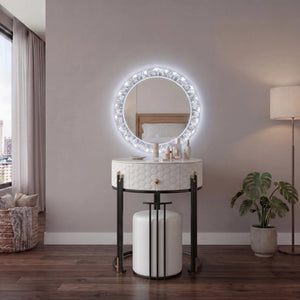
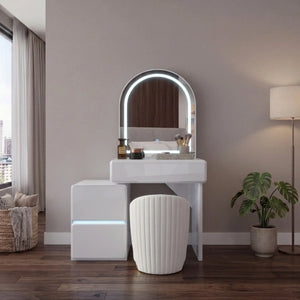
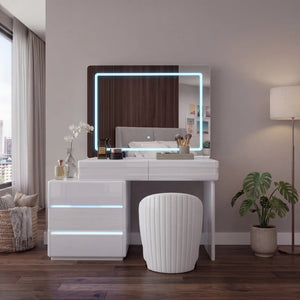
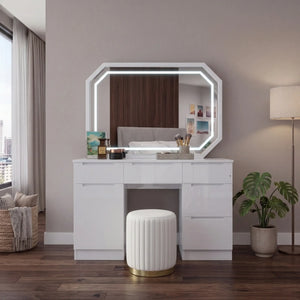
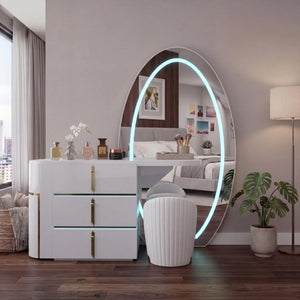
You want a spot to do your hair and makeup. Somewhere that feels a little bit yours. But your bedroom is small, and every inch already has a job. But here is the thing. You do not need a big room for a dressing table. You just need to use your space in a smarter way.. Let us walk through it, step by step. How Do You Style a Dressing Table in a Small Room?  Pick a narrow table with drawers. Place it by a window or in a spare corner. Add a mirror that bounces light, keep the top nearly clear, and hide clutter in the drawers. Choose a stool that tucks fully underneath so the floor stays open. That is the short version. Now here is how to get each part right. Pick the Right Table First Most guides jump straight to styling. That is a mistake. The wrong table will never look good, no matter how you dress it. So start here. Go Narrow, Not Wide In a small room, width is the enemy. A wide table eats floor space and blocks the walkway. Look for a slim dressing table instead. A narrow top still holds a mirror, a tray and your daily bits. It just does it without filling the room. Many dressing tables come in compact widths made for exactly this problem. Choose One with Drawers A dressing table with drawers does two jobs at once. It gives you a surface, and it gives you storage. That matters in a small room. Every item you tuck into a drawer is one less item cluttering the top. Skip the open-legged tables with no storage. In a tight space, you need every drawer you can get. Match It to Your Other Furniture A small room looks bigger when the furniture matches. Mismatched pieces chop the space into bits and make it feel busy. Pick a dressing table in the same colour as your wardrobe and drawers. White is the safest, because it keeps things light and open. If your other pieces are grey, match the grey. The goal is one calm, planned look Where to Put It in a Small Bedroom   Placement makes or breaks the whole thing. The same care goes into your other small bedroom furniture, so plan the layout as a whole. Here are the spots that work. By the window. This is the best spot if you have it. Natural light is perfect for make up. Keep the table just to the side, not right against the glass, so the light falls on your face. In a corner. Corners often sit empty because nothing else fits. A slim table turns that dead space into something useful. In an alcove. Older UK homes often have a recess beside the chimney breast. A compact table slots into it neatly. At the foot of the bed. If the wall there is free, a narrow table can sit against it. Just leave room to walk past. Get the Mirror Right A mirror does more than show your face. In a small room, it is a tool. Mirrors bounce light around. They make walls feel further apart. A well-placed mirror can make a tiny room feel twice the size. Here is a clever trick. Use a mirror that is bigger than you think you need. A large mirror over a small table brings drama and reflects more light. The table stays compact, but the area feels grand. Angle it to catch daylight from the window. That single move brightens the whole corner. Light It Well British mornings are dark for months of the year. One weak ceiling bulb will not cut it. A mirror with built-in LED lights solves this. The light sits right where you need it, on your face, with no shadows. It makes getting ready faster and easier in winter. No LED mirror? A small lamp on the side works too. Warm light is kinder than harsh white light. It also adds a cosy glow to the corner. Keep the Top Clear This is where most people go wrong. They pile everything on the table, and it looks messy. Follow one simple rule. Only keep out what you use every day. Everything else goes in a drawer. Use a small tray to gather your daily items in one spot. A tray keeps things tidy and looks deliberate. A mug or ceramic pot is perfect for holding makeup brushes upright. Space on the table is not wasted. It is what makes the whole thing look styled rather than cluttered. Hide the Clutter in Drawers Drawers are your best friend in a small room. But a messy drawer is just hidden chaos. Add drawer dividers to keep things sorted. Small sections mean every lipstick and brush has a home. You find things faster, and the drawer stays neat. Line the drawers with a soft cloth or felt. It stops items sliding around and protects the surface. This is a small touch that makes a cheap table feel considered. Keep bedroom bits separate from beauty bits. Chargers and phones belong in a bedside cabinet, not on your dressing table. That keeps the beauty station just for beauty. Add a Stool That Tucks Away A stool that sticks out into the room ruins the space-saving effect. Choose one that slides fully under the table. When you are not using it, it disappears. The floor stays open and the room feels bigger. A padded stool adds a soft touch too. It breaks up all the hard furniture surfaces and makes the corner feel welcoming. If floor space is really tight, a small stool with storage inside doubles up. You get a seat and a hidden box in one. Small Touches That Finish the Look Once the basics are set, a few small things bring the whole corner to life. A small vase with fresh or dried flowers adds a spot of nature. One framed photo makes the space personal. A scented candle gives the corner a calm, spa-like feel. A ring dish or trinket tray holds jewellery without clutter. The keyword is small. One or two of these finish the look. Any more and you are back to clutter. Make It Work as a Desk Too   Many UK homes are short on space, and more people work from home now. Your dressing table can pull double duty. A flat-topped table works as a desk by day and a vanity by morning. Clear the tray to one side, set down your laptop, and you have a workspace. Pack it away later, and it is a dressing table again. This trick saves you buying two pieces of furniture. In a small room, that is a real win. Quick Styling Checklist Here is the whole thing at a glance. Step What to do Choose the table Narrow, with drawers, matching your other furniture Place it By a window, in a corner, or in an alcove Hang the mirror Larger than the table, angled to catch light Add light LED mirror or a small warm lamp Style the top Daily items only, gathered on a tray Sort the drawers Use dividers and keep beauty bits separate Pick a stool One that tucks fully underneath Finish One or two small touches, nothing more Bringing It Together A small bedroom is not a reason to skip a dressing table. It is a reason to be smart about it. Pick the right table first. Use light and mirrors to open the space. Keep the top clear and let the drawers do the hard work. Do that, and even the tiniest corner becomes a spot you look forward to using. Your small room has room for this. You just needed the plan. FAQs How do you style a dressing table in a small UK bedroom?  Choose a narrow table with drawers, place it near a window or in a corner, and add a mirror that reflects light. Keep the top clear with just a tray of daily items, and pick a stool that tucks underneath. Where should a dressing table go in a small room?  A window is best for natural light. If that is not possible, use an empty corner, an alcove beside the chimney breast, or a free wall at the foot of the bed. What size dressing table suits a small bedroom?  A narrow, compact design works best. A slim top still holds everything you need without blocking the walkway or crowding the room. Can a dressing table be used as a desk?  Yes. A flat-topped dressing table doubles as a desk. This is handy in small UK homes where space for a separate desk is limited. How do I stop my dressing table looking cluttered?  Keep only daily items on top and gather them on a tray. Store everything else in the drawers with dividers. Empty surface space is what makes it look styled.  
Read article
Gloss vs Matt Furniture: Which Is Better for UK Bedrooms?
  • Article author: By Aroosh Krtasker
  • Article published at:
  • Article comments count: 0
Gloss vs Matt Furniture: Which Is Better for UK Bedrooms?
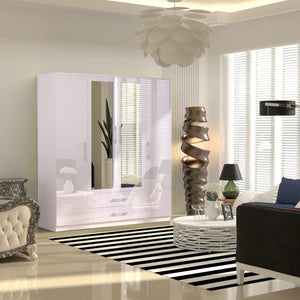
You stand in the showroom. A white gloss wardrobe shines under the lights on your left. A soft matt one sits quietly on your right. Both look great here. Then you get one home, and something feels off. This is the trap. Furniture that dazzles in a bright showroom behaves differently in a real bedroom. UK homes make this worse. Our rooms are often small, our windows are often north facing, and our winters are long and grey. So before you pick, let us work out which finish actually fits your room, your light and your daily life. Gloss or Matt? The Short Answer Gloss suits small, dark rooms because the shiny surface bounces light and makes the space feel bigger. Matt suits larger or busy rooms because it hides marks and feels calm. Neither is better overall. The right one depends on your room size and how much cleaning you want to do. Now let us dig into the details. What Is the Difference Between Gloss and Matt?   The difference is shine. That is really it. A gloss finish is smooth and reflective. Light hits it and bounces back, so the surface almost glows. Most affordable UK bedroom furniture gets this shine from a high gloss laminate pressed onto MDF board. A matt finish has no shine. Light lands and stays there. The surface looks flat, soft and warm. Both can be the same colour. A white gloss wardrobe and a white matt wardrobe are the same white. They just handle light in opposite ways. Most UK bedroom furniture comes flat packed, and both finishes arrive the same way. The finish is baked into the laminate at the factory, so it does not wear off with normal use. Gloss Furniture: The Good and the Bad Gloss gets a lot of love, and for good reason. But it asks something back. Where Gloss Wins Gloss reflects light. In a small room, that is a real gift. The bounce makes walls feel further apart, and the whole space feel airier. It also looks modern. A gloss wardrobe gives that clean, hotel-style finish people save on their phones. Pair it with plain bedding, and the room looks smart with very little effort. Cleaning is quick too. The smooth surface wipes down in seconds. A damp cloth lifts most marks with no scrubbing. Gloss shows colour boldly. A white gloss piece looks crisp and bright, not dull or flat. Where Gloss Struggles Here is the catch. Gloss shows fingerprints. Every touch leaves a mark, and on a dark gloss surface those marks stand out fast. Scratches show more too. The shine draws the eye to any scuff. A gloss surface needs a gentle hand and a soft cloth, never a rough scourer. So gloss looks stunning, but it wants a little care to stay that way. Matt Furniture: The Good and the Bad Matt is the quiet one. It never shouts, and that is its strength. Where Matt Wins Matt hides marks. Fingerprints barely show. Small scratches disappear into the flat surface. For a busy home or a child's room, that is a big deal. It feels calm. Matt absorbs light rather than reflecting it, so the room feels soft and restful. Good for a space where you sleep, read, and unwind. There is no glare. Gloss can catch a lamp or the sun and flash it back at you. Matt never does that. Where Matt Struggles Matt needs light. In a dark room, it can feel flat and heavy, because it gives nothing back. A north-facing bedroom with one weak bulb is not Matt's best friend. Deep cleaning is harder too. The surface is slightly textured, so spills and grime can cling. A quick wipe works, but a proper clean takes a bit more effort than gloss. Matt also feels less bright over time in a dim room. If your bedroom rarely gets direct sun, the flat surface can start to feel a little dull. That is worth knowing before you buy. Which Is Better for Small UK Bedrooms? Most UK bedrooms are small. The average UK double bedroom is tight on floor space, and many second bedrooms are smaller still. Plenty of them face north and get poor light for half the year. In that setting, gloss usually wins. The reflective surface does the job a bigger window would do. It borrows light and spreads it around. A white gloss wardrobe in a small London flat can make the room feel noticeably wider. Matt still works in a small room. It just needs help. Good lighting, light wall colours and a mirror nearby all lift a matt piece out of the shadows. If your room is large and bright, the choice opens up. Both finishes look great when light is not a problem. Which Finish Suits Each Piece? You do not have to pick one finish for the whole room. Different pieces have different jobs. Wardrobes. This is the biggest surface in the room. Gloss here gives the most light bounce for your money. It is the piece where shine pays off most. Chest of drawers. A gloss chest of drawers looks sleek, but the top gets used daily. If you rest cups, keys and makeup on it, matt hides the marks better. Bedside cabinets. These sit right by your pillow and catch lamp light. Gloss can throw a small glare at night. Matt keeps the bedside soft and glare-free. Dressing tables. A gloss dressing table pairs beautifully with an LED mirror, because both play with light. This is a spot where gloss shines, literally. Does Colour Change the Choice?   Yes, more than people expect. White gloss is the most forgiving. Fingerprints barely show on white, so you get all the shine with less cleaning. It is the safest gloss choice. Grey gloss sits in the middle. It hides marks better than black but still gives a good light bounce a popular pick for a reason. Black or dark gloss looks stunning and dramatic. It also shows every fingerprint and speck of dust. Beautiful, but high maintenance. How to Keep Gloss Furniture Fingerprint-Free This is the question nobody answers, so here it is. Wipe with a soft microfibre cloth, not paper towel. Paper can scratch. Use warm water with a drop of washing up liquid for daily marks. Dry straight after with a clean cloth to stop streaks. Skip bleach, harsh sprays and anything gritty. They dull the shine. For stubborn marks, a little glass cleaner on the cloth works. Never spray it straight on. Wipe once a week, and gloss stays looking new. Do this, and the fingerprint problem almost disappears. Most people just never learn the trick. Can You Mix Gloss and Matt? You can, and plenty of people now do. The rule is simple. Let one finish lead and the other support. Do not split the room fifty-fifty, or it looks confused. A common combination is a gloss wardrobe as the star, with matt drawers and bedside cabinets around it. The shine draws the eye to one piece, and the matt keeps the rest calm. Stick to one colour family when you mix. White gloss with white matt looks planned. Random colours plus mixed finishes look like a jumble. Quick Comparison Here is the whole thing in a nutshell. Your situation Best finish Small or dark room, want more light Gloss Large or bright room, want calm Matt Hate cleaning, hands always busy Matt Love a modern, hotel look Gloss Dark colour like black Matt is easier to live with Want the safest all rounder White gloss Making Your Choice There is no wrong answer here. There is only the right answer for your room. Look at your space first. Small and dark points to gloss. Large and bright leaves you free to pick either. Then think about cleaning, because that decides how happy you stay months later. Choose the finish that fits your real room, not the showroom. That is the piece you will still love next year. FAQs Is gloss or matt furniture better for UK bedrooms?  Neither wins outright. Gloss suits small, dark rooms and modern styles. Matt suits larger rooms and hides marks. Your room's light and your cleaning habits decide it. Most UK bedrooms are small and dark, so gloss often has the edge. Does gloss furniture scratch easily?  Gloss shows scratches more because the shine highlights them. The surface is not weaker; the marks are just easier to see. Use a soft cloth, and it stays smooth. Why does my glossy furniture always look smudged?  Gloss shows fingerprints, especially in dark colours. A weekly wipe with a microfibre cloth and warm soapy water keeps it clear. White gloss shows marks the least. Is matt furniture harder to clean?  Daily wiping is easy, but the slightly textured surface makes deep cleaning harder than gloss. Spills should be wiped quickly before they settle. Which finish is best for a small UK bedroom?  Gloss, in most cases. The reflective surface bounces light and makes a small room feel bigger. That helps in poorly lit UK rooms, and white gloss gives the effect with the least fingerprint fuss  
Read article
Best Bedroom Furniture for Renters in the UK
  • Article author: By Aroosh Krtasker
  • Article published at:
  • Article comments count: 0
Best Bedroom Furniture for Renters in the UK
The average private renter in Britain moves every four years. Share a house and that drops to about eighteen months. Now think about the wardrobe you are about to buy. Will it fit up the stairs of the next flat? Will it survive being taken apart? Will the landlord notice the marks it left behind? Most furniture guides never ask those questions. They are written for people who own their homes. This one is written for you. What Furniture Should Renters Buy First? Buy storage before anything else. A wardrobe, a chest of drawers and a bedside cabinet solve ninety per cent of rental bedroom problems. Pick freestanding pieces that come apart, sit flat against a wall, and need no drilling. Everything else can wait. That is the short version. Here is the longer one. Why Renting Changes What You Should Buy Three things make renting different. They are simple, but they change every choice you make. You will move again. Furniture has to travel. Solid pieces that cannot be taken apart become somebody else's problem on moving day. You cannot drill. Most tenancy agreements ban holes in walls. That rules out floating shelves, wall-mounted mirrors and fitted wardrobes. Your deposit is at risk. Scratched floors and marked walls cost real money at the end of a tenancy. The average UK deposit runs into four figures. Keep those three in mind, and the shopping list almost writes itself. Best Bedroom Furniture for Renters Here is what actually works in a rented room, and what to look for in each piece. A Wardrobe That Moves With You Most rentals give you one narrow built-in cupboard. Some give you nothing at all. A freestanding wardrobe fixes that, and it leaves with you. Look for a tall unit rather than a wide one. Height uses air, and air is free. Floor space is the thing you are short of. Flat, handleless doors matter more than people think. They sit closer to the wall and they read as built-in from across the room. Fussy handles and heavy trim make a piece look like it is standing in the middle of somebody else's house. Check the height before you buy. Most tall wardrobes sit around 200cm. Older UK flats sometimes have low ceilings, especially in loft conversions and Victorian top floors. Measure yours. Corner wardrobes deserve a look too. Rented rooms are often awkward shapes. A corner unit uses the dead space that nothing else wants. A Chest of Drawers That Does the Hiding A tidy rental feels bigger. That is the whole trick. A chest of drawers swallows the clutter that would otherwise sit on every surface. Socks, chargers, paperwork, the lot. Shut the drawer and the room changes. Go for four or five drawers rather than six if the room is small. Six drawer units are usually wider, and width is what you cannot spare. One practical tip. Check the drawer runners. Metal runners survive being emptied, moved and refilled. Cheap plastic ones sag after the second move. Bedside Storage With Drawers, Not Shelves Open shelves look nice in photos. In real life they collect dust and show every mess. A bedside cabinet with a closed drawer hides your phone charger, your book and everything else. The room stays calm. Some designs come with a USB port built in. That is genuinely useful in a rental, because you rarely get a socket exactly where you want one. No trailing extension lead across the floor. Buy two if the room allows it. Matching cabinets on both sides give that hotel look, and it costs very little extra. A Bed Frame You Can Take Apart This is where renters get caught out. Some bed frames are built as one solid piece. They go into the room fine. They do not always come out. A metal frame with bolted joints comes apart in twenty minutes. It goes back together just as easily. Look at bed frames with an upholstered headboard if you want it to look soft rather than clinical. Keep every bolt and fitting in a labelled bag. Tape the bag to the underside of the frame. Future you will be grateful. Some frames offer adjustable height. That is worth having, because it lets you slide storage boxes underneath in a small room. A Mirror You Do Not Have to Hang Wall mirrors mean drilling. Drilling means a hole. A hole means an argument about your deposit. The way around it is a mirrored wardrobe door. You get a full length mirror and storage in the same footprint. Nothing goes on the wall. Freestanding floor mirrors work too. Just make sure the base is heavy enough to stand safely. A Shoe Cabinet Instead of a Shoe Pile Rented flats rarely have a proper hallway. Shoes end up in the bedroom. A flip down shoe cabinet solves it without eating the room. These units are around 28cm deep. That is slim enough to sit behind a door or along a narrow wall where nothing else fits. Three tiers suit one person. Four or five tiers works for a couple or a shared house. A Dressing Table That Doubles as a Desk Rented rooms often have to do two jobs. Getting ready in the morning, working in the afternoon. A dressing table with a flat top handles both. Add a mirror for the morning, clear it for the laptop later. An LED mirror is worth the extra. British light is poor for months of the year, and rented rooms often have one weak ceiling bulb. Good light makes a real difference in January. What to Check Before You Order This part gets skipped, and it causes the most grief. Furniture arrives flat packed, but the boxes are still long and heavy. Before you click buy, walk the route. Measure the front door width, then every doorway on the way to the bedroom. Measure the narrowest point of the stairs, and check the turn at the top. If there is a lift, measure the inside depth and the door opening. Check whether the delivery driver brings items inside or leaves them at the entrance. Write those numbers down. Compare them against the boxed dimensions, not the assembled ones. One more thing. Tell your landlord or building manager if delivery needs the communal door propped open. Some blocks have rules about it. How to Protect Your Deposit Deposit disputes usually come down to small, avoidable damage. None of this takes long. Put felt pads under every leg and corner before you push a piece into place. Never drag furniture across laminate or vinyl. Lift it, or slide it on a blanket. Leave a small gap between tall units and the wall so the paint does not scuff. Keep furniture away from radiators. Heat damages finishes and blocks warmth. Photograph the room before and after you move furniture in. Assemble flat pack items in the room where they will live, not in the hallway. That last one matters more than it sounds. A fully built wardrobe carried through a narrow doorway is how walls get gouged. What If the Flat Is Already Furnished? Plenty of UK rentals come part furnished. You get a bed and a wardrobe you did not choose. You still have options. Ask the landlord whether unwanted items can go into storage. Many agree, as long as you cover the cost and return everything at the end. Get it in writing. If the answer is no, work around what is there. Add the pieces the flat is missing rather than duplicating what it has. Most furnished rentals give you a wardrobe and nothing else. Drawers and bedside storage are usually the gap. Buy in one colour so your pieces at least look deliberate next to the landlord's. White and grey are the safest, because they sit quietly beside almost anything. What Does It Cost to Furnish a Rented Bedroom? Real numbers, not showroom fantasy. Bare minimum, around £400 to £500.  One wardrobe and one chest of drawers. Entry-level single-door wardrobes start around £180. Comfortable setup, around £700 to £900. Wardrobe, chest of drawers, two bedside cabinets. This is where most renters land. Full room, around £1,000 to £1,300. Add a bed frame and a dressing table. Two things keep the cost down. Look for stores that deliver free across the UK mainland, because delivery charges on bulky items add up fast. And check the sale section before paying full price. Spread it out if you need to. Storage first, comfort second, extras last. Nobody has to buy a bedroom in one afternoon. Worth Remembering Rented rooms are not permanent. Your furniture can be. Buy storage before decoration. Pick pieces that come apart. Measure the stairs before you measure the room. Protect the floor on day one, not on the day you leave. Do that, and the room works now. It also works in the next flat, and the one after that. FAQs What is the best bedroom furniture for renters in the UK?  Freestanding storage. A tall wardrobe, a chest of drawers and bedside cabinets cover most needs. Choose pieces that come apart for moving and need no wall fixings. Can I put up shelves or a wardrobe in a rented flat?  Freestanding furniture is fine and needs no permission. Anything fixed to a wall usually breaks the tenancy agreement. Check your contract before drilling anything. How do I stop furniture damaging a rental floor?  Fit felt pads under every leg. Lift rather than drag. Slide heavy items on a folded blanket if you cannot lift them alone. Is flat pack furniture good for renters?  Yes. It fits through narrow doors and up tight stairs, and most of it can be taken apart again. Keep the instructions and fittings for the next move. Should I buy furniture or rent it?  Buying works out cheaper for most people. Rental subscriptions suit very short stays, but the monthly cost overtakes the purchase price within a couple of years.  
Read article
Small Bedroom Furniture Ideas for UK Flats
  • Article author: By Aroosh Krtasker
  • Article published at:
  • Article comments count: 0
Small Bedroom Furniture Ideas for UK Flats
Flat bedrooms in the UK are small in a way that surprises people. A "double" bedroom in a new build can be under nine square metres. Once the bed goes in, you are often left with a strip of floor and a lot of frustration. The mistake most people make is buying normal furniture and hoping it fits. It rarely does. Small flat bedrooms need pieces chosen for the space, not squeezed into it. This guide walks through furniture ideas that actually work in a compact UK flat. No magazine fantasy rooms. Just pieces that store more, take less, and leave you room to move. Why Flat Bedrooms Need a Different Approach A flat bedroom comes with a specific set of problems. Understanding them makes every choice easier. The floor is the thing you are short of, not the walls. Most rooms have plenty of unused height above waist level. Standard furniture ignores it and spreads sideways instead. Storage is usually missing, too. Older flats rarely have built-in wardrobes. New builds often give you a token cupboard and nothing else. So your furniture has to carry all the storage the room lacks. Then there is the rental factor. Roughly one in five UK households rents. That means no drilling, no fitted units, and everything has to leave with you. Freestanding furniture is not a compromise here. It is the sensible choice. Measure the Room Before You Buy Anything Every idea below depends on this one step. Skip it, and you will order something that does not fit. Measure the wall width, the height to the ceiling, and the depth you can spare. Then measure the doorway and the turn on the stairs, since delivery access matters in a flat. Write the numbers on your phone and shop against them. One extra check saves real grief. Measure the space a door or drawer needs to open, not just the space the furniture sits in. A Wardrobe That Doesn't Steal the Room The wardrobe is the biggest piece in the room, so it makes or breaks the layout. Hinged doors are the quiet enemy of a small flat. Each door needs a half-metre of clear swing in front of it. A sliding wardrobe removes that problem completely, since the panels move sideways rather than out. You reclaim the floor that a swinging door would have blocked. Light is the other lever. A mirrored wardrobe bounces daylight around the room and makes it feel bigger. It also saves you from buying a separate full-length mirror, which is one less object in a tight space. If your room has an awkward corner, use it. A corner unit like the Verona Corner Wardrobe fills dead space that would otherwise sit empty. It turns the least useful part of the room into proper storage. Go Tall With a Slim Chest of Drawers   This is where the "use height, not floor" rule pays off most. A wide, low chest of drawers eats floor space you cannot spare. A tall, narrow one holds the same clothes in a fraction of the footprint. Look for a chest of drawers that builds upward rather than outward. Colour helps here too. A white or light gloss finish reflects light and blends into a pale wall, so the chest feels smaller than it is. A dark, bulky unit does the opposite in a small room. A Bed That Stores Things Too Your bed is the single largest object in the room. In a small flat, it cannot afford to be only a bed. The space under the mattress is the biggest chunk of wasted storage in most bedrooms. A storage bed reclaims it. Ottoman designs lift the whole base on gas pistons, opening up the entire footprint underneath. Think of it as a horizontal wardrobe for duvets, suitcases, and winter coats. Divan beds with built-in drawers are the simpler alternative. They store less than a full ottoman, but they are easier to move and cost less. Either way, the rule is the same. In a flat, the bed should earn its keep with storage, not just sleep. A Compact Dressing Table That Earns Its Place Plenty of people assume a dressing table is a luxury a small room cannot afford. The right one disagrees. The trick is width. A slim unit like the Bristol Dressing Table gives you a surface, a drawer and a mirror spot without dominating the room. Compact models around 80cm wide slot into gaps a full desk never could. Pick one that doubles up. A dressing table with a decent drawer replaces a bedside table or a small chest. One piece doing two jobs is the whole philosophy of furnishing a small flat. Slim Bedside Tables, or Skip Them Entirely Bedside tables are where small rooms lose space without noticing. A bulky nightstand crowds the bed and blocks the walkway. A narrow one does the same job in half the width. Browse bedside tables with a slim footprint and, ideally, a drawer to hide clutter. If there is genuinely no room, skip the table. A small wall-mounted shelf beside the bed holds a phone, a book and a lamp. It floats, so it steals no floor at all. Use the Walls, Not the Floor This is the habit that separates a cramped flat from a calm one. Every item you lift off the floor makes the room feel bigger. Floating shelves hold books and clutter without a footprint. Wall hooks take bags and dressing gowns off the back of a chair. Wall lights replace table lamps and free up the surfaces you do have. Look up when you plan storage. The top third of most bedroom walls sits completely empty. That is prime space in a room where floor is scarce. Make One Piece Do Two Jobs Multifunctional furniture is not a gimmick in a small flat. It is survival. A storage stool works as a seat and a box for spare bedding. A bench at the foot of the bed doubles as a shelf and a place to sit while dressing. A mirror with a shallow cabinet behind it stores jewellery and reflects light at the same time. Before you buy anything, ask one question. Can this do a second job? If the answer is no, and the room is tight, think again. Ideas That Work in a Rental Renters get the short end of most design advice. These ideas need no permission and leave no marks. Freestanding storage instead of anything fitted or drilled. Peel-and-stick hooks for bags, coats and accessories. Plug-in wall lights rather than wired fittings. A large rug to cover a carpet you did not choose. Textiles for colour, since they leave when you do. The furniture is the part worth spending on, because it moves house with you. A landlord's plain walls matter far less once the room has smart storage and good light. Small Bedroom Mistakes to Avoid A few habits make a small flat feel smaller. Skip these. Buying wide, low furniture that spreads across the floor. Choosing hinged wardrobe doors with no swing space. Pushing the bed under the window and blocking the light. Leaving the upper walls empty while the floor overflows. Picking dark, heavy furniture for an already tight room. Your Quick Small-Bedroom Checklist Run through this before you order anything. Measure the wall, the height and the delivery route. Choose sliding or mirrored doors over hinged where you can. Go tall and slim rather than wide and low. Pick a bed or dressing table that stores things too. Lift clutter onto the walls with shelves and hooks. Keep the palette light to reflect what daylight you get. Making a Small Flat Bedroom Work A small flat bedroom is not a design problem. It is a space problem, and space problems have practical answers. Use height instead of floor. Make every large piece store something. Lift the small stuff onto the walls. Choose light colours and doors that do not swing. Do that, and the room stops feeling like a compromise. The best small bedrooms are rarely the ones with the most furniture. They are the ones where every piece earns its place. FAQs What is the best furniture for a small bedroom in a UK flat?  Tall slim storage, a sliding or mirrored wardrobe, and a bed with under-bed storage. Each one saves floor space, which is the thing a UK flat is short of. How do I maximise space in a small bedroom?  Use the walls and the height rather than the floor. Choose furniture that stores things, lifts clutter onto shelves, and keeps the colour palette light and reflective. What wardrobe is best for a small bedroom?  A sliding wardrobe, since the doors do not swing into the room. A mirrored front adds light and space, and a corner unit uses awkward dead space that would otherwise sit empty. How can I add storage without drilling in a rental?  Use freestanding furniture, peel-and-stick hooks, and plug-in lights. A storage bed and a slim chest of drawers add real capacity, and all of it moves with you. What colours make a small UK bedroom look bigger?  Light shades like white and soft grey. They reflect daylight and blur the line between the furniture and a pale wall, so the room reads as one open space.
Read article