


The average private renter in Britain moves every four years. Share a house and that drops to about eighteen months.
Now think about the wardrobe you are about to buy. Will it fit up the stairs of the next flat? Will it survive being taken apart? Will the landlord notice the marks it left behind?
Most furniture guides never ask those questions. They are written for people who own their homes. This one is written for you.
What Furniture Should Renters Buy First?
Buy storage before anything else. A wardrobe, a chest of drawers and a bedside cabinet solve ninety per cent of rental bedroom problems. Pick freestanding pieces that come apart, sit flat against a wall, and need no drilling. Everything else can wait.
That is the short version. Here is the longer one.
Why Renting Changes What You Should Buy
Three things make renting different. They are simple, but they change every choice you make.
You will move again. Furniture has to travel. Solid pieces that cannot be taken apart become somebody else's problem on moving day.
You cannot drill. Most tenancy agreements ban holes in walls. That rules out floating shelves, wall-mounted mirrors and fitted wardrobes.
Your deposit is at risk. Scratched floors and marked walls cost real money at the end of a tenancy. The average UK deposit runs into four figures.
Keep those three in mind, and the shopping list almost writes itself.
Best Bedroom Furniture for Renters
Here is what actually works in a rented room, and what to look for in each piece.
A Wardrobe That Moves With You
Most rentals give you one narrow built-in cupboard. Some give you nothing at all.
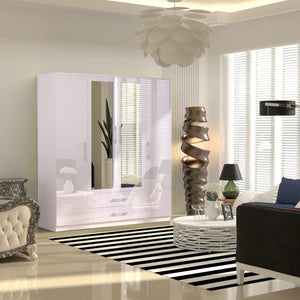
A freestanding wardrobe fixes that, and it leaves with you. Look for a tall unit rather than a wide one. Height uses air, and air is free. Floor space is the thing you are short of.
Flat, handleless doors matter more than people think. They sit closer to the wall and they read as built-in from across the room. Fussy handles and heavy trim make a piece look like it is standing in the middle of somebody else's house.
Check the height before you buy. Most tall wardrobes sit around 200cm. Older UK flats sometimes have low ceilings, especially in loft conversions and Victorian top floors. Measure yours.
Corner wardrobes deserve a look too. Rented rooms are often awkward shapes. A corner unit uses the dead space that nothing else wants.
A Chest of Drawers That Does the Hiding
A tidy rental feels bigger. That is the whole trick.
A chest of drawers swallows the clutter that would otherwise sit on every surface. Socks, chargers, paperwork, the lot. Shut the drawer and the room changes.
Go for four or five drawers rather than six if the room is small. Six drawer units are usually wider, and width is what you cannot spare.
One practical tip. Check the drawer runners. Metal runners survive being emptied, moved and refilled. Cheap plastic ones sag after the second move.
Bedside Storage With Drawers, Not Shelves
Open shelves look nice in photos. In real life they collect dust and show every mess.
A bedside cabinet with a closed drawer hides your phone charger, your book and everything else. The room stays calm.
Some designs come with a USB port built in. That is genuinely useful in a rental, because you rarely get a socket exactly where you want one. No trailing extension lead across the floor.
Buy two if the room allows it. Matching cabinets on both sides give that hotel look, and it costs very little extra.
A Bed Frame You Can Take Apart
This is where renters get caught out.
Some bed frames are built as one solid piece. They go into the room fine. They do not always come out.
A metal frame with bolted joints comes apart in twenty minutes. It goes back together just as easily. Look at bed frames with an upholstered headboard if you want it to look soft rather than clinical.
Keep every bolt and fitting in a labelled bag. Tape the bag to the underside of the frame. Future you will be grateful.
Some frames offer adjustable height. That is worth having, because it lets you slide storage boxes underneath in a small room.
A Mirror You Do Not Have to Hang
Wall mirrors mean drilling. Drilling means a hole. A hole means an argument about your deposit.
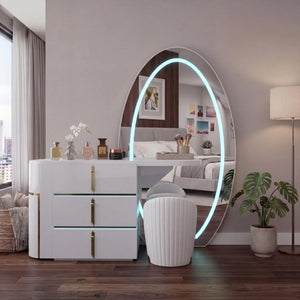
The way around it is a mirrored wardrobe door. You get a full length mirror and storage in the same footprint. Nothing goes on the wall.
Freestanding floor mirrors work too. Just make sure the base is heavy enough to stand safely.
A Shoe Cabinet Instead of a Shoe Pile
Rented flats rarely have a proper hallway. Shoes end up in the bedroom.
A flip down shoe cabinet solves it without eating the room. These units are around 28cm deep. That is slim enough to sit behind a door or along a narrow wall where nothing else fits.
Three tiers suit one person. Four or five tiers works for a couple or a shared house.
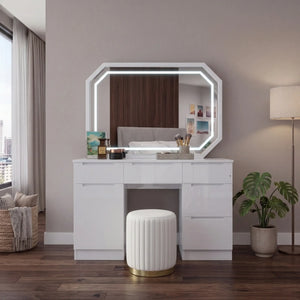
A Dressing Table That Doubles as a Desk
Rented rooms often have to do two jobs. Getting ready in the morning, working in the afternoon.
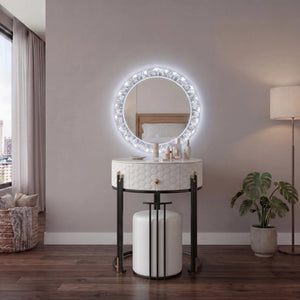
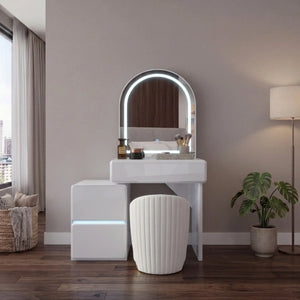
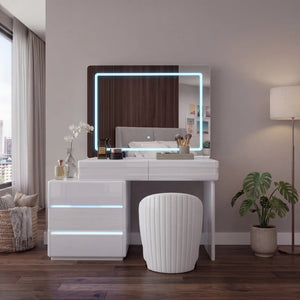
A dressing table with a flat top handles both. Add a mirror for the morning, clear it for the laptop later.
An LED mirror is worth the extra. British light is poor for months of the year, and rented rooms often have one weak ceiling bulb. Good light makes a real difference in January.
What to Check Before You Order
This part gets skipped, and it causes the most grief.
Furniture arrives flat packed, but the boxes are still long and heavy. Before you click buy, walk the route.
-
Measure the front door width, then every doorway on the way to the bedroom.
-
Measure the narrowest point of the stairs, and check the turn at the top.
-
If there is a lift, measure the inside depth and the door opening.
-
Check whether the delivery driver brings items inside or leaves them at the entrance.
Write those numbers down. Compare them against the boxed dimensions, not the assembled ones.
One more thing. Tell your landlord or building manager if delivery needs the communal door propped open. Some blocks have rules about it.
How to Protect Your Deposit
Deposit disputes usually come down to small, avoidable damage. None of this takes long.
-
Put felt pads under every leg and corner before you push a piece into place.
-
Never drag furniture across laminate or vinyl. Lift it, or slide it on a blanket.
-
Leave a small gap between tall units and the wall so the paint does not scuff.
-
Keep furniture away from radiators. Heat damages finishes and blocks warmth.
-
Photograph the room before and after you move furniture in.
-
Assemble flat pack items in the room where they will live, not in the hallway.
That last one matters more than it sounds. A fully built wardrobe carried through a narrow doorway is how walls get gouged.
What If the Flat Is Already Furnished?
Plenty of UK rentals come part furnished. You get a bed and a wardrobe you did not choose.
You still have options.
Ask the landlord whether unwanted items can go into storage. Many agree, as long as you cover the cost and return everything at the end. Get it in writing.
If the answer is no, work around what is there. Add the pieces the flat is missing rather than duplicating what it has. Most furnished rentals give you a wardrobe and nothing else. Drawers and bedside storage are usually the gap.
Buy in one colour so your pieces at least look deliberate next to the landlord's. White and grey are the safest, because they sit quietly beside almost anything.
What Does It Cost to Furnish a Rented Bedroom?
Real numbers, not showroom fantasy.
Bare minimum, around £400 to £500.
One wardrobe and one chest of drawers. Entry-level single-door wardrobes start around £180.
Comfortable setup, around £700 to £900. Wardrobe, chest of drawers, two bedside cabinets. This is where most renters land.
Full room, around £1,000 to £1,300. Add a bed frame and a dressing table.
Two things keep the cost down. Look for stores that deliver free across the UK mainland, because delivery charges on bulky items add up fast. And check the sale section before paying full price.
Spread it out if you need to. Storage first, comfort second, extras last. Nobody has to buy a bedroom in one afternoon.
Worth Remembering
Rented rooms are not permanent. Your furniture can be.
Buy storage before decoration. Pick pieces that come apart. Measure the stairs before you measure the room. Protect the floor on day one, not on the day you leave.
Do that, and the room works now. It also works in the next flat, and the one after that.
FAQs
What is the best bedroom furniture for renters in the UK?
Freestanding storage. A tall wardrobe, a chest of drawers and bedside cabinets cover most needs. Choose pieces that come apart for moving and need no wall fixings.
Can I put up shelves or a wardrobe in a rented flat?
Freestanding furniture is fine and needs no permission. Anything fixed to a wall usually breaks the tenancy agreement. Check your contract before drilling anything.
How do I stop furniture damaging a rental floor?
Fit felt pads under every leg. Lift rather than drag. Slide heavy items on a folded blanket if you cannot lift them alone.
Is flat pack furniture good for renters?
Yes. It fits through narrow doors and up tight stairs, and most of it can be taken apart again. Keep the instructions and fittings for the next move.
Should I buy furniture or rent it?
Buying works out cheaper for most people. Rental subscriptions suit very short stays, but the monthly cost overtakes the purchase price within a couple of years.
Latest posts

How to Choose the Best Sofa Set Online in the UK
Read article
Why Modern Furniture Works So Well in UK Homes
Read article
High Gloss Shoe Cabinets: The Luxury Look for UK Hallways
Read article